 Australia
 Canada
 Cayman Islands
 Dominican Republic
 Hong Kong
 India
India
 Indonesia
 Ireland
 Jamaica
 Singapore
 Thailand
 United Kingdom
 United States
 Vietnam

 New Zealand Business Directory
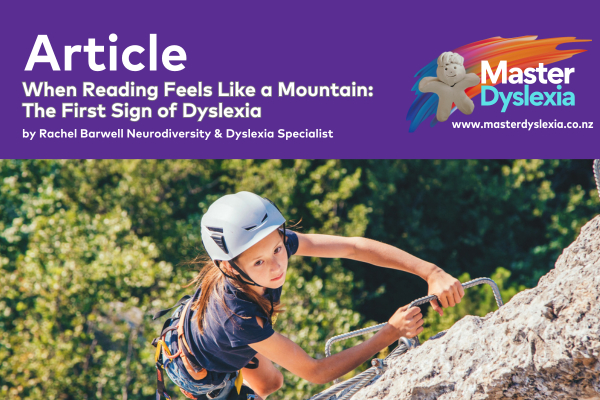
When Reading Feels Like a Mountain: The First Sign of Dyslexia
By Master Dyslexia Ltd · 01/23/2026
When reading feels like a battle, it’s easy for a child to believe they can’t do it. But what if the problem isn’t effort, it’s approach? This article explores the first sign of dyslexia: reading fluency challenges, and how meaning, not memorisation, opens the door to understanding. Read on to discover how connection turns confusion into confidence. You can see it in their ey es before they even say the words. The page is open, the letters are there, but something doesn’t connect. Their little shoulders tighten, or they twist in their chair, and then comes the whisper, “I can’t do this.” For many families, this is the first real sign that something deeper is going on. Reading doesn’t come easily. Words seem to blur, lines get lost, and the rhythm never quite flows. What should feel natural instead feels like climbing a mountain in heavy boots. When Reading Isn’t Effortless Reading fluency, being able to read smoothly, confidently, and with understanding, is often one of the first hurdles for a dyslexic learner. You might hear your child read in a stop–start rhythm, guessing at words, skipping lines, or losing focus halfway through a sentence. And while it can be tempting to think more practice will fix it, this isn’t about effort. Dyslexic learners are often some of the hardest workers you’ll ever meet. The real challenge lies in how their minds process information. Their thinking is vivid, creative, and three-dimensional. They don’t think in words ; they think in pictures . That means reading, which is a word-based activity, asks them to think in a way that doesn’t come naturally. It’s like asking a musician to play without sound, or a dancer to move without rhythm. The Story Beneath the Struggle When a child says, “I can’t do this,” they’re not giving up; they’re expressing genuine confusion. Imagine looking at a page full of symbols that refuse to stay still or make sense, while everyone else seems to read them effortlessly. That moment of frustration isn’t about ability; it’s about disorientation . Their brain is trying to decode the symbols, but can’t find meaning quickly enough to keep the rhythm. It’s no wonder they feel lost. Yet behind that struggle lives a different kind of intelligence, one that’s curious, imaginative, and capable of seeing patterns others miss. Dyslexic minds are often brilliant storytellers, inventors, and visual problem-solvers. The challenge is helping them connect their creative way of thinking to the structured world of words. How We Build Fluency Differently At Master Dyslexia , we teach fluency through meaning, not memorisation. When a learner trips over a word, we pause. “Do you know what that word means?” If not, we explore it, we look it up, talk about it, find a picture, create a 3-D model, maybe even act it out. Once the meaning is clear, the word starts to belong to them. Next time they see it, they remember the image, the feeling, the understanding behind it, and suddenly, the word clicks. We also take learning beyond the page. Words come alive through experience, a visit to a park, a hands-on project, a moment of laughter. When a word is lived, not just learned, fluency begins to flow. Celebrating Every Small Step Every tiny moment of progress matters. The first time a child reads a sentence with confidence. The first time they stop guessing and start connecting. These moments are worth celebrating; they show that real understanding is taking root. Because true fluency isn’t about reading fast. It’s about reading with connection. When a child begins to see meaning instead of just memorising letters, reading stops being a battle and becomes an invitation to explore. And that’s where confidence grows. From “I Can’t” to “I Can” If your child often says, “I can’t do this,” take heart. It’s not a sign of failure; it’s the start of understanding. Dyslexia isn’t a roadblock; it’s a different pathway to learning. When we meet children where they are, when we teach through meaning, imagery, and experience, we don’t just help them read; we help them rediscover their own brilliance. If this sounds familiar, you’re not alone. Many parents have felt the same confusion and worry until they discovered a way to work with their child’s mind, not against it. The Davis® Parent PowerDyslexia Course is designed to help you do exactly that. Together, we explore hands-on tools that bring words to life, so your child can move from frustration to confidence, and from “I can’t” to “I really can!” Learn more or book a free consultation at masterdyslexia.co.nz
About This Author

Kapiti Coast, Wellington, New Zealand
More Articles From This Author
Slow Reading & Processing Speed — Understanding the Pace of the Dyslexic Mind

2026-01-23As we continue exploring the Top Five Signs of Dyslexia, I want to spend some time with a trait that many people notice early on, even if they don’t yet have the language for it. It’s the child who reads beautifully one moment and then seem… Read More »